Food & Beverages
Acts as preservative, flavor enhancer, and acidity regulator. Grade consistency here affects shelf life, flavor profile, and batch-to-batch quality. issues that show up at retail before they're caught in the plant.


Citric acid is a naturally occurring organic acid widely used in food, beverage, pharmaceutical, and industrial applications. OGSCM coordinates procurement, logistics, and site-specific requirements across GCC and MENA markets.
For food, beverage, and pharmaceutical operators, a supply gap or grade inconsistency doesn't just slow production — it affects formulation batches that may already be in process.
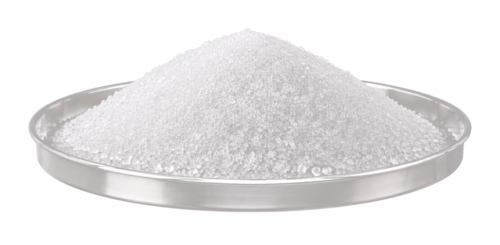
Packaged in sacks or big bags
Citric acid (C₆H₈O₇) is a key metabolite found in plants and animals. In commercial applications, it is extracted from natural dietary sources and produced via fermentation or chemical synthesis.
Its highly versatile nature allows it to regulate acidity, preserve product stability, and support chemical reactions. Knowing the origin, purity, and grade of citric acid is what determines whether a batch behaves as expected in formulation — and where to look when it doesn't.
| Property | Value |
|---|---|
Property | Value |
Chemical Formula | C₆H₈O₇ |
CAS Number | 77-92-9 |
Other Names | 2-hydroxypropane-1,2,3-tricarboxylic acid, Anhydrous citric acid, Citrate, Citric Acid Monohydrate, Uralyt U |
Molecular Weight | 192.124 g/mol |
Appearance | Odorless white solid |
Density | 1.66 g/cm³ (Anhydrous) |
These specifications determine how citric acid behaves across applications. pH regulation, product stability, and formulation outcomes all track back to them.
Acts as preservative, flavor enhancer, and acidity regulator. Grade consistency here affects shelf life, flavor profile, and batch-to-batch quality. issues that show up at retail before they're caught in the plant.
Used in cleansers, toners, and serums, where pH stability affects both product performance and shelf life. A purity deviation at this stage can compromise an entire formulation batch.
Provides disinfectant properties and scale removal. Inconsistent concentration affects cleaning performance and requires more frequent reapplication, which adds cost and time to maintenance cycles.
Serves as a pH corrector and antioxidant in drug formulations where purity and grade are subject to regulatory review. Off-spec material here means batch rejection, not just rework.
Citric acid is biodegradable and generally safe, but excessive environmental concentrations may affect soil pH and plant germination. OGSCM coordinates sourcing and handling in alignment with applicable environmental and industrial regulations.
• Use personal protective equipment (gloves, goggles, and masks) when handling powders or solutions.
• Avoid inhalation and prolonged skin contact.
• Store in tightly closed containers in a cool, dry, well-ventilated area away from incompatible or polluting substances.
• Maintain storage temperature below 30°C and relative humidity under 50%.
Citric acid is available in multiple commercial forms:
• Granular, fine granular, powder, liquid (50% solution), anhydrous (solid)
• Packaged in sacks or big bags
OGSCM manages delivery scheduling, documentation, and grade verification to keep supply aligned with production requirements for both industrial and food-grade applications.
We match the right grade to your process needs.
On-time delivery with strong regional & global logistics.
Strict quality control and batch consistency.
Technical & commercial support throughout your procurement journey.
Serving industries across GCC and MENA with local expertise.
Anhydrous citric acid contains no water of crystallization and is commonly selected where low moisture is important. Citric acid monohydrate contains one molecule of water and may behave differently in storage, dissolution, and formulation. The correct grade depends on the product specification and process conditions.
Not automatically. Although food-grade citric acid is manufactured to high purity standards, pharmaceutical and cosmetic formulations may require additional specifications, documentation, microbiological limits, or pharmacopeial compliance. Grade verification should be completed before procurement.
Store it in tightly sealed packaging in a cool, dry, well-ventilated area. Keep the storage temperature below 30°C and relative humidity below 50%, protecting bags from moisture, direct sunlight, and incompatible materials.
Citric acid is typically supplied as powder, fine granular, granular, anhydrous solid, monohydrate, or a 50% liquid solution. Standard packaging includes industrial sacks and big bags, selected according to consumption volume, handling method, and site-storage capacity.
Consistent purity, particle size, moisture content, and dissolution behavior help maintain stable acidity, flavor, shelf life, and formulation performance. In food, beverage, cosmetic, pharmaceutical, and industrial processes, an inconsistent grade can lead to batch adjustments, rework, or rejection.
Our team is ready to help you choose
the right grade for your application.
