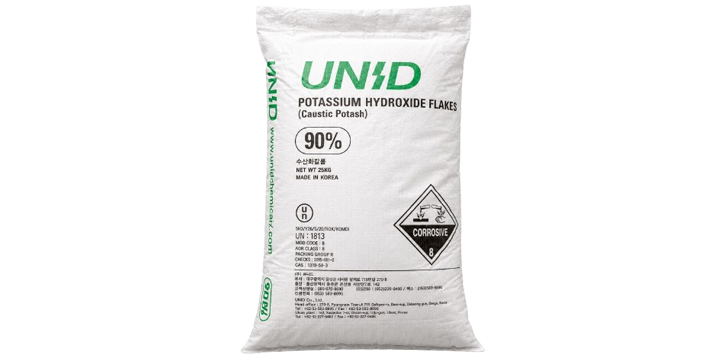
Potassium Hydroxide is highly corrosive. It can cause severe skin burns and serious eye damage, and its dissolution in water releases substantial heat. Handling, solution preparation, transfer, emergency response, and disposal must follow the current SDS/MSDS and the site's approved safety procedures.
Key operational considerations include:
-Use suitable alkali-resistant gloves, goggles, face protection, and chemical-resistant protective clothing.
-Maintain appropriate ventilation during bag opening, powder transfer, and solution preparation.
-Keep bags tightly sealed and protect from moisture and carbon dioxide exposure.
-Store in a dry, controlled area away from incompatible chemicals.
-Use compatible containers, pumps, pipes, hoses, valves, and seals.
-Prevent release to drains, soil, and watercourses.
-Maintain appropriate spill-containment and emergency-response arrangements.
-Dispose of KOH residues and contaminated materials through approved waste-management procedures.
KOH is harmful to aquatic environments at low concentrations because it can rapidly increase pH. Uncontrolled releases must therefore be prevented and managed under site and environmental procedures.