Polymerization Initiator
Used for expanded polystyrene and other thermosetting polymers. Operational Effect: Supports controlled radical formation and helps maintain stable polymer properties and efficient crosslinking during production.

OGSCM supports the reliable supply of DCP in the GCC and MENA regions through coordinated procurement, logistics management and documentation support. This approach helps maintain operational continuity while supporting safe handling and storage practices.
OGSCM supports DCP users through:
• Coordination of supply and logistics in the GCC and MENA regions
• Support for the preparation of regulatory compliance documentation and requirements
• Provide technical guidance for process integration and safe handling
• Coordinate procurement activities with operational plans to support continuous production
This approach helps maintain supply reliability, support sustainable polymerization operations, and enhance safe industrial handling practices. :::
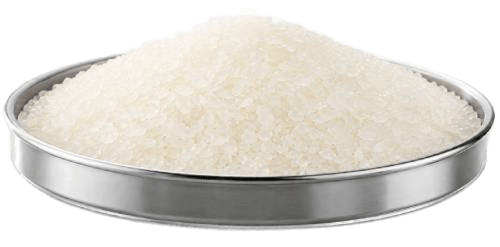
Dicumyl Peroxide (DCP, C₁₈H₂₂O₂), also known as bis(1-methyl-1-phenylethyl) peroxide, bis(α,α-dimethylbenzyl) peroxide, Proxane DC-80, diallyl peroxide or Luproc DCP, is a high purity organic peroxide widely used in the rubber and plastics industries as a crosslinking agent and polymerization initiator. Its molecular structure contains a peroxide bond that decomposes upon heating to produce free radicals, supporting polymer crosslinking and improving thermal, mechanical and chemical properties.
| Property | Value |
|---|---|
Property |
Value |
Chemical Formula |
[C₆H₅C(CH₃)₂]₂O₂ |
Other Names |
Bis(1-methyl-1-phenylethyl) peroxide, Bis(α, α-dimethylbenzyl) peroxide, PEROXAN DC-80, Dialcyl peroxide, LUPEROX DCP |
CAS Number |
80-43-3 |
Molar Mass |
270.372 g·mol⁻¹ |
SADT |
80 °C |
Maximum Storage Temperature |
≤ 20 °C |
Active Oxygen |
4.74 wt.% |
Appearance |
White powder |
Packaging |
25 kg cardboard packages |
Used for expanded polystyrene and other thermosetting polymers. Operational Effect: Supports controlled radical formation and helps maintain stable polymer properties and efficient crosslinking during production.
Supports polymer network formation and improves resin stability and mechanical strength. Operational Effect: Helps reduce curing variability and supports stable resin quality in subsequent stages.
Acts as a crosslinking agent in rubber production. Operational Effect: Helps improve thermal resistance, mechanical properties and product durability during service.
Supports the formation of high-performance composite fibers. Operational Impact: Helps maintain fiber uniformity and mechanical strength during processing.
Facilitates polymerization and network formation in specialized polymer systems. Operational Impact: Supports process reliability and batch-to-batch consistency.
Dicumyl peroxide is toxic to aquatic life and has poor biodegradability. Improper storage, release, or disposal may contaminate water and soil, creating environmental liabilities.
Proper handling, monitoring, and disposal practices are important to reduce environmental risks and support sustainable industrial operations.
Dicumyl peroxide is flammable and may react violently when exposed to excessive heat, sparks, or sources of ignition. Safe industrial handling practices include:
• Store in chemical-resistant containers in cool, dry, well-ventilated areas
• Avoid contact with oxidizing agents, flames, and heat sources
• Wear gloves, masks, and safety goggles
• Provide adequate ventilation in enclosed processing areas
Operational Impact: Following established safety procedures helps reduce the risk of accidents, protect personnel, and support uninterrupted production. ---
• Supplied in 25 kg cardboard packages
• Recommended storage temperature: ≤ 20°C
• Approximate shelf life: 6 months from date of manufacture
• Packaged in accordance with industrial transport requirements to support safe handling, regulatory compliance, and operational continuity
Maintaining recommended storage conditions is important to maintain product stability and support predictable performance throughout its intended useful life.
Dicumyl Peroxide begins to decompose when exposed to elevated temperatures, generating free radicals that initiate crosslinking reactions. The exact decomposition behavior depends on the product grade and formulation. For safe processing and storage, always follow the manufacturer's Technical Data Sheet (TDS) and Safety Data Sheet (SDS) recommendations.
Although both are organic peroxides, they are designed for different industrial applications. Dicumyl Peroxide is primarily used for polymer crosslinking and rubber curing at higher processing temperatures, while Benzoyl Peroxide is commonly used as a polymerization initiator in resins and acrylic systems, as well as in pharmaceutical and cosmetic applications. Selecting the appropriate peroxide depends on your processing conditions and desired material properties.
Yes. Dicumyl Peroxide is widely used as a curing agent for certain grades of silicone rubber and other elastomers. It helps produce durable crosslinked networks with excellent heat resistance, mechanical strength, and long-term stability. The recommended peroxide concentration and curing conditions vary depending on the silicone formulation and the required performance characteristics.
Our team is ready to help you choose
the right grade for your application.