Introduction
Pumps are essential equipment in the oil and gas industry that facilitate the movement of fluids through various processes from extraction to refining and distribution. They are designed to handle a variety of fluids, including crude oil, natural gas, water and various chemicals, under varying pressure and temperature conditions. The efficiency and reliability of pumps significantly affect operational performance and overall production costs in the oil and gas sector.
Applications
Pumps have many applications in the oil and gas industry, including:
- Production: Pumps are used to extract crude oil from wells, especially in enhanced oil recovery (EOR) methods where water or gas is injected to increase pressure.
- Transportation: They transport crude oil and refined products over long distances through pipelines.
- Refining: In refineries, pumps move various raw materials and products through various processing units, ensuring continuous operation.
- Water injection: Used for secondary recovery processes to maintain reservoir pressure and increase oil recovery.
- Chemical injection: Pumps inject chemicals into pipelines to prevent corrosion, hydrate formation, and other operational issues.
- Waste management: Pumps manage produced water and other waste fluids and ensure proper disposal or treatment.
Types (classifications)
Pumps can be classified based on their operating principle, design, and application:
- Based on operating principle:
- Positive displacement pumps: These pumps move fluid by trapping a fixed volume and forcing it into a discharge pipe. Common types include:
- Gear pumps: Use rotating gears to move the fluid. Ideal for high-viscosity fluids
- Diaphragm pumps: Use a flexible diaphragm to create a pumping action. Suitable for corrosive or abrasive fluids.
- Piston pumps: Use reciprocating pistons to move fluids. Effective for high-pressure applications
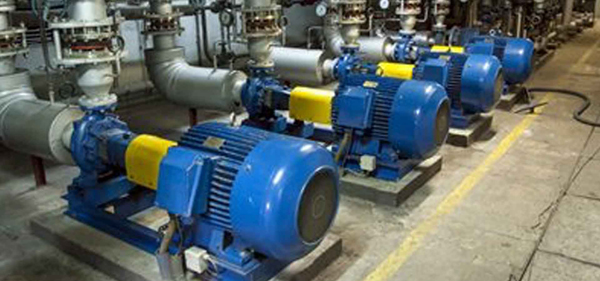
- Centrifugal pumps: Use the rotational energy of an impeller to increase the velocity and pressure of a fluid. Typically used to transport low-viscosity fluids.
- By application:
- Submersible pumps: Designed to operate underwater. Often used in downhole applications for oil extraction.
- Vertical turbine pumps: Ideal for deep well applications. Used for water injection and extraction.
Design
The design of pumps in the oil and gas industry is influenced by several factors:
- Capacity and pressure ratings: Pumps must be designed to handle specific flow rates and pressures based on application requirements.
- Material selection: Materials must be selected based on fluid characteristics (corrosiveness, viscosity) to ensure durability and reliability.
- Efficiency: High-efficiency designs reduce energy consumption and operating costs.
- Safety Standards: It is important to meet industry safety standards, including features such as pressure relief valves and emergency shutdown systems.
- Modularity: Modular designs facilitate maintenance and allow easy access to parts for repair or replacement.
Spare Parts
Pump maintenance requires an inventory of spare parts to ensure reliable operation:
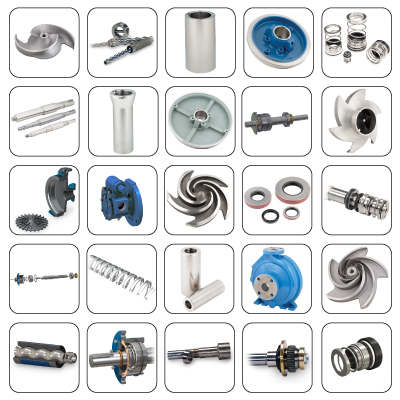
- Impellers: Replacement impellers for centrifugal pumps to maintain flow efficiency.
- Diaphragms: Replacement diaphragms for diaphragm pumps to ensure proper sealing and operation.
- Seals and Gaskets: Essential to prevent leaks at joints and interfaces.
- Bearings: Replacement bearings to support rotating components and reduce friction.
- Valves: Stock check valves and relief valves to ensure proper flow control and safety.