Petroleum Treating Processes in Oil Refineries
Petroleum treating processes are essential operations widely applied across oil refineries, gas processing plants, and petrochemical facilities to remove undesirable impurities from crude oil, natural gas, and intermediate refinery streams. The primary objective of petroleum treating is to eliminate contaminants such as sulfur compounds, nitrogen compounds, water, salts, metals, acids, and solid particles in order to protect downstream equipment, improve product quality, and ensure compliance with environmental and product specifications.
Major Petroleum Treating Processes
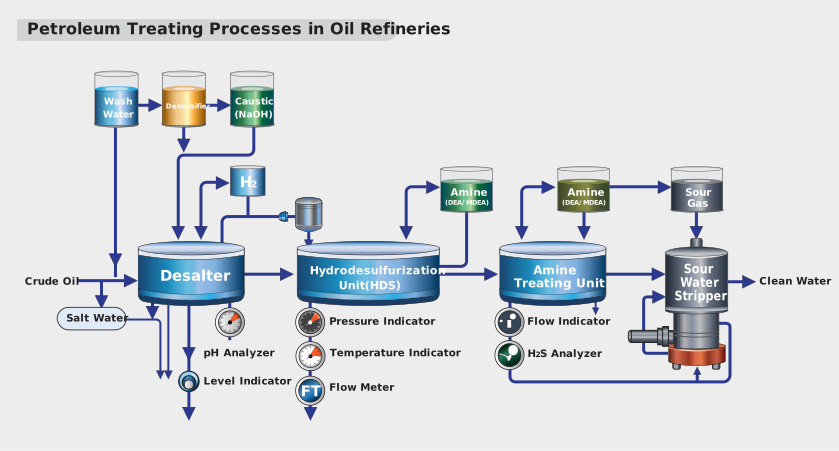
Desalting
Crude oil desalting is one of the first treating steps in refineries, designed to remove inorganic salts, water, and suspended solids from crude oil before atmospheric distillation. Key contaminants removed:
- Sodium, calcium, and magnesium chlorides
- Free and emulsified water
- Sand and rust particles
Desalting improves heat exchanger performance, reduces corrosion, and prevents fouling in downstream units.
Merox Treating
Merox (Mercaptan Oxidation) processes are used to remove mercaptans from LPG, naphtha, and kerosene streams by converting them into disulfides. Key benefits:
- Odor removal
- Improved product stability
- Compliance with product specifications
Amine Treating
Amine treating is applied in both gas and liquid hydrocarbon streams to remove acidic gases. The process involves absorption, regeneration, and solvent circulation. Common licensors:
- UOP (Honeywell)
- Axens
- Shell Global Solutions
Chemicals
Petroleum treating processes rely on a wide range of specialty and bulk chemicals to remove contaminants, enhance separation efficiency, and protect refinery and gas plant equipment. These chemicals are supplied in standardized industrial packaging formats to ensure safe handling, storage, and continuous plant operation.
Treating Chemicals
Treating chemicals are applied across desalting, gas sweetening, hydrotreating, and liquid hydrocarbon treating units. Common chemical categories include:
- Demulsifiers – used in crude oil desalters to break water-in-oil emulsions
- Corrosion Inhibitors – protect pipelines, vessels, and heat exchangers
- Antifoaming Agents – control foaming in amine and treating columns
- Oxygen and H₂S Scavengers – remove trace corrosive gases
- Caustic Soda (NaOH) – used in caustic treating and mercaptan removal units
Typical Industrial Packaging including Bulk supply via road tanker or ISO tank, IBC (1,000 L) and Steel drums (200–220 L). OGSCM Group supplies refinery- and gas-plant-approved treating chemicals in all standard industrial packing formats, ensuring safe logistics, consistent quality, and full technical documentation including MSDS, COA, and handling procedures. Petroleum treating chemicals are typically sourced from internationally recognized manufacturers whose products meet refinery licensor and EPC specifications. Leading global brands include:
- BASF – amines, formulated solvents, specialty treating chemicals
- Dow Chemical – treating chemicals, solvents, additives
- Shell Chemicals – solvents and process chemicals
- Clariant – demulsifiers, corrosion inhibitors, specialty chemicals
- Arkema – amines and specialty solvents
- LANXESS – sulfur removal and specialty chemical solutions
- Innospec – fuel and refinery treating chemicals
- Nalco Water (Ecolab) – corrosion inhibitors, demulsifiers, antifoams
OGSCM Group collaborates with approved manufacturers and international suppliers to deliver high-quality petroleum treating chemicals with reliable availability, competitive commercial terms, and full compliance with project and operational requirements.
Main Equipment
Treating Vessels and Columns
Key equipment used in petroleum treating includes separators, absorbers, contactors, regenerators, and desalters. Well-known manufacturers and suppliers:
- UOP (Honeywell)
- Axens
- L&T Heavy Engineering
- Doosan Enerbility
- Mitsubishi Heavy Industries (MHI)
OGSCM provides sourcing and supply services for treating vessels, internals, mist eliminators, distributors, and associated mechanical components.
Heat Exchangers
Heat exchangers are used for temperature control, solvent regeneration, and energy recovery across treating units. Commercial suppliers include:
- Alfa Laval
- API Heat Transfer
- Hisaka
- Kelvion
- Tranter
OGSCM Group supplies heat exchangers and spare parts such as gaskets, tube bundles, and expansion joints.
Instrumentation
Instrumentation ensures precise control of treating processes and safe operation in hazardous environments. Major brands:
- Emerson
- Yokogawa
- Honeywell
- Endress+Hauser
- ABB
| Tag | Full Name | Function |
|---|---|---|
| PT | Pressure Transmitter | Sends pressure signal to control system |
| PI | Pressure Indicator | Local pressure reading |
| TT | Temperature Transmitter | Measures process temperature |
| FT | Flow Transmitter | Measures liquid or gas flow |
| AT | Analyzer Transmitter | Monitors impurity levels |
Valves
Valves are essential for flow control, isolation, and safety across all petroleum treating processes. Major manufacturers:
- Emerson (Fisher, Vanessa)
- Cameron (SLB)
- Flowserve
- L&T Valves
- Neway
- Kitz
OGSCM Group offers comprehensive procurement solutions for industrial valves, including control, safety, ball, gate, globe, butterfly, and check valves, with full documentation and technical support.