
HFFR‑1232 — Insulation & Sheath Compound
| Property | Result / Unit |
|---|---|
| Tensile before aging | 11.5 – 12.5 N/mm² (approx.) |
| Elongation before aging | 230 – 240 % |
| Density | 1.48 – 1.49 g/cm³ |
| Hardness (after 15 s) | 52 – 53 Shore D |
| Cold bending test | PASS |
| MFI (150°C / 21.6 kg) | 5 ± 0.5 g/10 min (approx.) |
| Smoke density (IEC 61034) | 80% (confirm) |
| Oxygen index (ASTM 2863) | Min 32 % |
| Flame spread (IEC 60332‑1) | > 50 mm |
| Halogen acid gas evolution | Zero % (halogen‑free) |
Introduction to HFFR‑1232
As global industries prioritize safety, environmental responsibility, and long-term performance in cable systems, the demand for advanced insulation materials has increased significantly. Among these innovations, HFFR-1232 has emerged as a leading halogen-free flame retardant (HFFR) compound designed to provide exceptional fire safety, mechanical stability, and electrical reliability. The compound is widely used in power, telecommunications, control, and signal cables, offering manufacturers an effective solution that meets both modern safety expectations and international regulatory standards.
Designed to combine high performance with low environmental impact, HFFR-1232 is formulated using polymer compounds, metal hydroxide flame retardants, stabilizers, and functional additives. This compound offers controlled flame spread, reduced smoke production, and elimination of harmful halogenated byproducts – making it ideal for installations where human safety and equipment protection are critical.
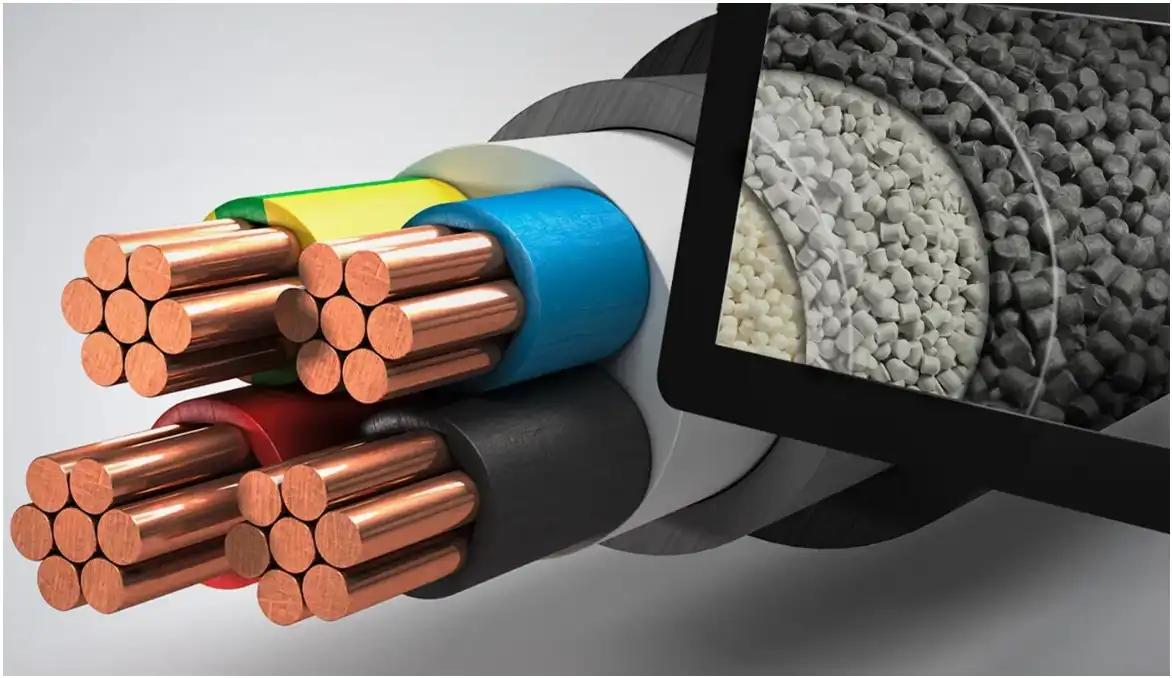
HFFR mean in HFFR-1232
The term HFFR stands for Halogen-Free Flame Retardant.
This classification describes compounds that:
- Do not contain chlorine, bromine, fluorine, or iodine
- Do not release toxic halogen acids when burned
- Produce less smoke compared to PVC and other halogenated materials
- Meet stringent standards for flame retardancy without relying on halogen-based
Therefore, HFFR-1232 is part of a class of cable materials designed to provide superior safety in the event of a fire.
HFFR-1232 as a halogen-free compound
HFFR-1232 is known as halogen-free because both its polymer matrix and flame retardant system completely eliminate halogenated materials. Instead, the formulation relies on:
- Metal hydroxides (typically magnesium hydroxide or aluminum trihydrate)
- Phosphorus-based synergists
- Non-halogenated polymer binders
During thermal decomposition, these additives release water vapor and form an insulating carbon layer instead of corrosive or toxic halogen gases. This allows the compound to comply with standards such as IEC 60754-1/2 regarding the emission of halogen-acid gases.
History and Development of HFFR-1232 in Cable Manufacturing
The development of HFFR-1232 and similar compounds can be attributed to increasing safety concerns in the 1980s and 1990s, when PVC dominated the cable industry. Major fire incidents in transportation systems, tunnels, and public buildings highlighted the hazards associated with halogenated materials, particularly their heavy smoke and hydrogen chloride gas emissions.
In response, polymer scientists began formulating halogen-free alternatives. HFFR technology evolved significantly during the 2000s with advances in:
- Polymer compatibility
- Improved nano-flame retardants
- Mechanical reinforcement techniques
- Improved processing and extrusion performance
HFFR-1232 represents a modern, refined version of these compounds – designed for optimal flame behavior, low smoke emission, and balanced electrical and mechanical properties suitable for mass-produced cable lines.
Key Features of HFFR-1232 Compound
Flame Retardant Properties of HFFR-1232 Compound
HFFR-1232 is specifically designed to limit flame propagation and reduce heat release. Its flame retardant system works through:
- Endothermic decomposition of metal hydroxides to absorb heat
- Evaporation of water vapor, diluting flammable gases
- Formation of a stable protective char, which acts as a physical barrier
- Reduced dripping, minimizing fire spread
When exposed to fire, this compound exhibits the following:
- Significant reduction in smoke opacity
- Minimal toxic gas production
- Zero hydrogen halide production
This performance is critical to minimizing the following:
- Respiratory hazards to occupants
- Corrosion damage to electronic systems
- Structural contamination
- Difficulty in evacuation due to reduced visibility
Low smoke index values also ensure compliance with IEC 61034 smoke density standards.
Mechanical and electrical performance in cable insulation
HFFR-1232 is formulated to maintain an excellent balance between mechanical durability and electrical reliability. Key performance characteristics include:
- High tensile strength and elongation
- Strong resistance to abrasion, deformation and tearing
- Stability to UV exposure and outdoor conditions
- Reliable dielectric strength and insulation resistance
- Good processability during extrusion
These properties make HFFR-1232 suitable for flexible cable products and fixed installations.
Applications of HFFR-1232 compound
Power cable insulation using HFFR-1232 compound
In low and medium voltage power cables, HFFR-1232 offers the following:
- Advanced fire protection
- Stable dielectric properties
- Reliable insulation and sheathing performance
- Safety for installation in indoor and outdoor environments
This makes this compound widely used in:
- Building wiring
- Industrial plants
- Renewable energy systems
- Public infrastructure
- Emergency circuits and safety systems
Use of HFFR-1232 in telecommunication cables
Telecommunication networks require cables that protect sensitive equipment and ensure uninterrupted service. The low smoke and halogen-free nature of HFFR-1232 makes it ideal for:
- Fiber optic cable jacketing
- Local area network and structured cabling systems
- Coaxial cables
- Metro, airport and data center communication wiring
In high-density wiring environments, reduced smoke emission helps maintain system integrity in emergencies. Control and signal cables are often installed in harsh industrial environments. HFFR-1232 provides:
- High mechanical integrity
- Resistance to oil and chemicals
- Accurate signal insulation
- Stable performance under vibration and mechanical stress
Typical areas of use include:
- Automation and process control systems
- Railway signaling
- Marine and offshore control networks
- Instrumentation cables in power plants
Comparison: HFFR-1232 vs. PVC and XLPE
Differences in Flame Retardant and Toxicity Levels
| Property | PVC | XLPE | HFFR-1232 |
| Halogen content | High | None | None |
| Smoke generation | High | Low | Very Low |
| Toxicity | High | Low | Very Low |
| Flame retardancy | Moderate–good (depending on additives) | Limited | Excellent |
| Corrosive emissions | High | None | None |
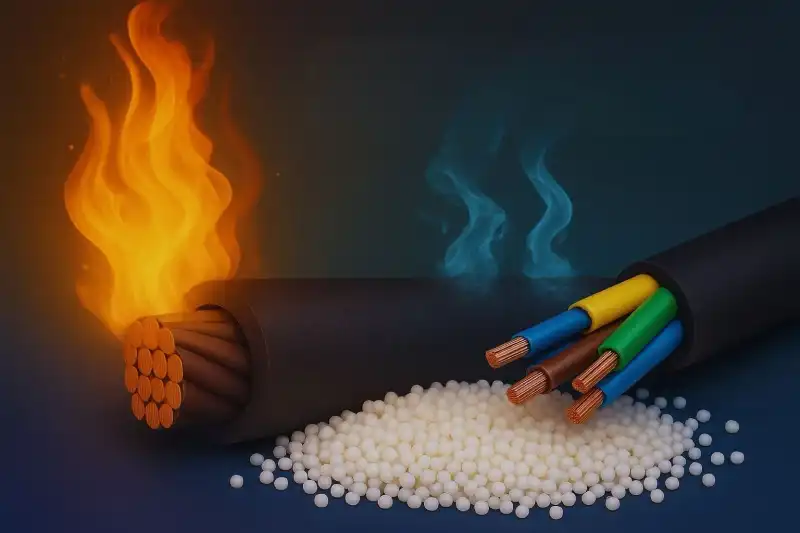
HFFR-1232 clearly outperforms PVC and XLPE in terms of safety, smoke and toxic behavior.
Durability and performance in harsh environments
- PVC: Susceptible to thermal aging and hardening; emits corrosive gases.
- XLPE: Excellent thermal properties but lower flame resistance unless modified.
- HFFR-1232: Offers strong thermal stability, increased mechanical strength and superior fire performance.
While XLPE excels in high temperature ratings, HFFR-1232 combines multi-criteria performance for a wider range of cable applications.
Cost vs. Safety Analysis for HFFR-1232 and PVC
PVC remains popular due to its low raw material costs. However, the total cost of ownership favors HFFR-1232 for the following reasons:
- Reduced replacement and maintenance costs
- Improved compliance with global safety guidelines
- Reduced risk of damage during fire
- Improved life cycle performance
For critical infrastructure, the long-term benefits of HFFR-1232 outweigh the initial cost differences.
International Standards for the Use of HFFR-1232 Compound
Review of IEC, UL and RoHS Compliance
HFFR-1232 is formulated to comply with key safety and environmental regulations, including:
- IEC 60332 – Flame Propagation
- IEC 60754-1/2 – Halogen Acid Gas Emission
- IEC 61034 – Smoke Density Performance
- UL 94 – Flammability of Materials
- UL 1685 – Vertical Flame Tests for Cable Assemblies
- RoHS – Restriction of Hazardous Substances
- REACH – Chemical Registration and Safety Compliance
Its formulation allows for use in international cable markets without regulatory restrictions.
Certifications Required for HFFR-Based Cable Production
Manufacturers using HFFR-1232 in cable insulation may seek certifications such as:
- CE Mark for European markets
- UL Listing for North America
- Marine Approvals (DNV, ABS, LR) for offshore use
- EN Fire Performance Classifications
- ISO 9001/14001 Process Certification
Proper testing and documentation ensure that cables meet end-use requirements.
Benefits of using HFFR-1232 compound in modern cable design
Environmental and health safety benefits
HFFR-1232 offers significant sustainability benefits:
- No halogen emissions
- Reduced smoke toxicity
- Better indoor air quality
- Safer production and disposal
- Compliance with green building and environmental regulations
This supports industries transitioning to environmentally friendly materials.
Reduce fire risks in high-risk industries
Industries such as power generation, transportation, petrochemical plants and commercial buildings require strong fire performance. HFFR-1232 enhances safety by:
- Limiting flame spread
- Improving evacuation visibility
- Reducing inhalation risks
- Minimizing equipment corrosion during a fire
This offers significant safety benefits compared to conventional halogenated materials.
Increased Cable Life and Operational Reliability
With excellent resistance to thermal degradation, mechanical abrasion and environmental exposure, HFFR-1232 ensures:
- Longer cable life
- Reduced downtime and operational failures
- Reduced maintenance requirements
- Stable electrical insulation properties
This reliability makes HFFR-1232 the preferred choice for critical installations.
Conclusion
HFFR-1232 is a major advancement in cable insulation technology that combines exceptional fire safety performance with environmental responsibility and engineering reliability. As global standards shift towards safer and greener cable materials, HFFR-1232 offers manufacturers a compatible, high-performance solution that is suitable for power distribution, telecommunications, control systems and industrial networks.
The halogen-free formulation, low smoke characteristics, mechanical durability and compliance with international standards make HFFR-1232 an ideal candidate for next generation cable designs. As industries continue to prioritize sustainability and safety, HFFR 1232 has a strong position as a leading material for future cable insulation developments.
Pingback: tadalafil 5mg tablets
Pingback: tetracycline hydrochloride ophthalmic ointment
Pingback: augmentin vs amoxicillin
Pingback: augmentin antibiotic
Pingback: lasix furosemide price
Pingback: viagra medication cost
Pingback: vidalista 20mg used for