
Introduction
Compressors are critical components in the oil and gas industry, responsible for increasing the pressure of gases to facilitate their transportation, storage and processing. They play a vital role in various stages of oil and gas operations, from upstream exploration and production to downstream refining and distribution. Considering the diverse applications and operational requirements, compressors are designed to meet specific performance criteria while ensuring reliability and efficiency.
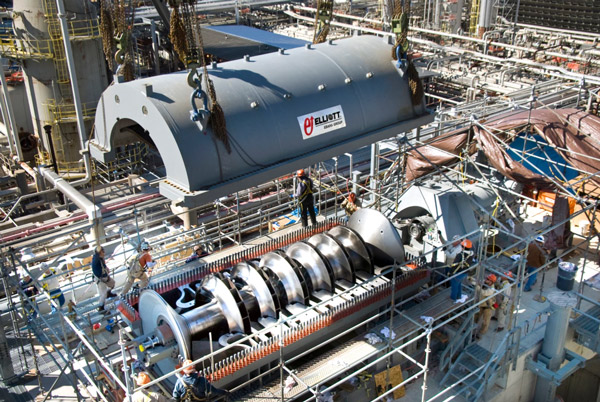
Applications
Compressors have a wide range of applications in the oil and gas sector, including:
- Natural gas processing: Compressors are used to compress natural gas for transportation through pipelines, ensuring that it can be efficiently transported over long distances.
- Gas lift systems: In oil production, compressors are used to inject gas into wells to reduce hydrostatic pressure, thereby increasing oil recovery.
- Refrigeration systems: Used in gas processing plants to cool gases during liquefaction, allowing the production of liquefied natural gas (LNG).
- Gas compression for storage: Compressors increase the pressure of gases for storage in high-pressure tanks or underground formations.
- Flare gas recovery: Compressors help recover flare gas for reuse in the production process, minimizing waste and greenhouse gas emissions.
Types (classifications)
Compressors can be classified based on several criteria:
- Based on the principle of operation:
- Positive displacement compressors: These compressors work by trapping a fixed volume of gas and then reducing its volume to increase the pressure. Common types include:
- Reciprocating compressors: Use pistons driven by a crankshaft. Suitable for high-pressure applications
- Rotary screw compressors: Use two interconnected screws to compress the gas. Known for their consistent performance and efficiency.
- Dynamic Compressors: These compressors rely on rotating elements to transfer velocity to the gas, which is then converted to pressure. Examples include:
- Centrifugal Compressors: Use a rotating impeller to increase the velocity of the gas. Typically used for large volumes of gas at moderate pressures.
- Axial Compressors: Use rotating blades to compress the gas along an axis. Often found in high-flow applications.
- By Application:
- Oilfield Compressors: Designed specifically for oil extraction and processing applications.
- Gas Transmission Compressors: Used in pipeline systems to maintain pressure and flow rates.
Design
Compressor design in the oil and gas industry involves several key considerations:
- Capacity and Pressure Requirements: Compressors must be designed to meet specific flow rates and pressure levels based on the application.
- Efficiency: High-efficiency designs reduce energy consumption, which is critical in energy-intensive operations.
- Durability: Compressors must withstand harsh operating conditions, including extreme temperatures and corrosive environments.
- Safety features: Incorporate safety measures such as pressure relief valves, temperature monitoring systems, and emergency shutdown mechanisms.
- Modular design: Facilitates maintenance and upgrades with easy access to components.
Spare parts
Compressor maintenance requires an inventory of spare parts to ensure reliable operation and minimize downtime:
- Pistons and rings: For reciprocating compressors, replacement pistons and rings are essential to maintain compression efficiency.
- Rotors and blades: Spare rotors or impellers for screw and centrifugal compressors to ensure optimal performance.
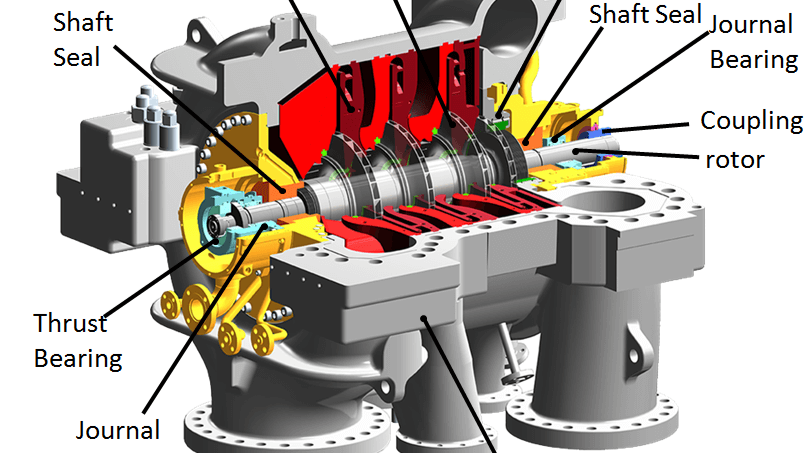
- Seals and gaskets: Prevent leaks and maintain pressure integrity in the compressor package.
- Valves: Spare inlet and outlet valves for quick replacement in case of failure.
- Bearings: Replacement of bearings to ensure smooth operation of moving parts.
Pingback: Isomerization Process in Oil Refineries - OGSCM Company